
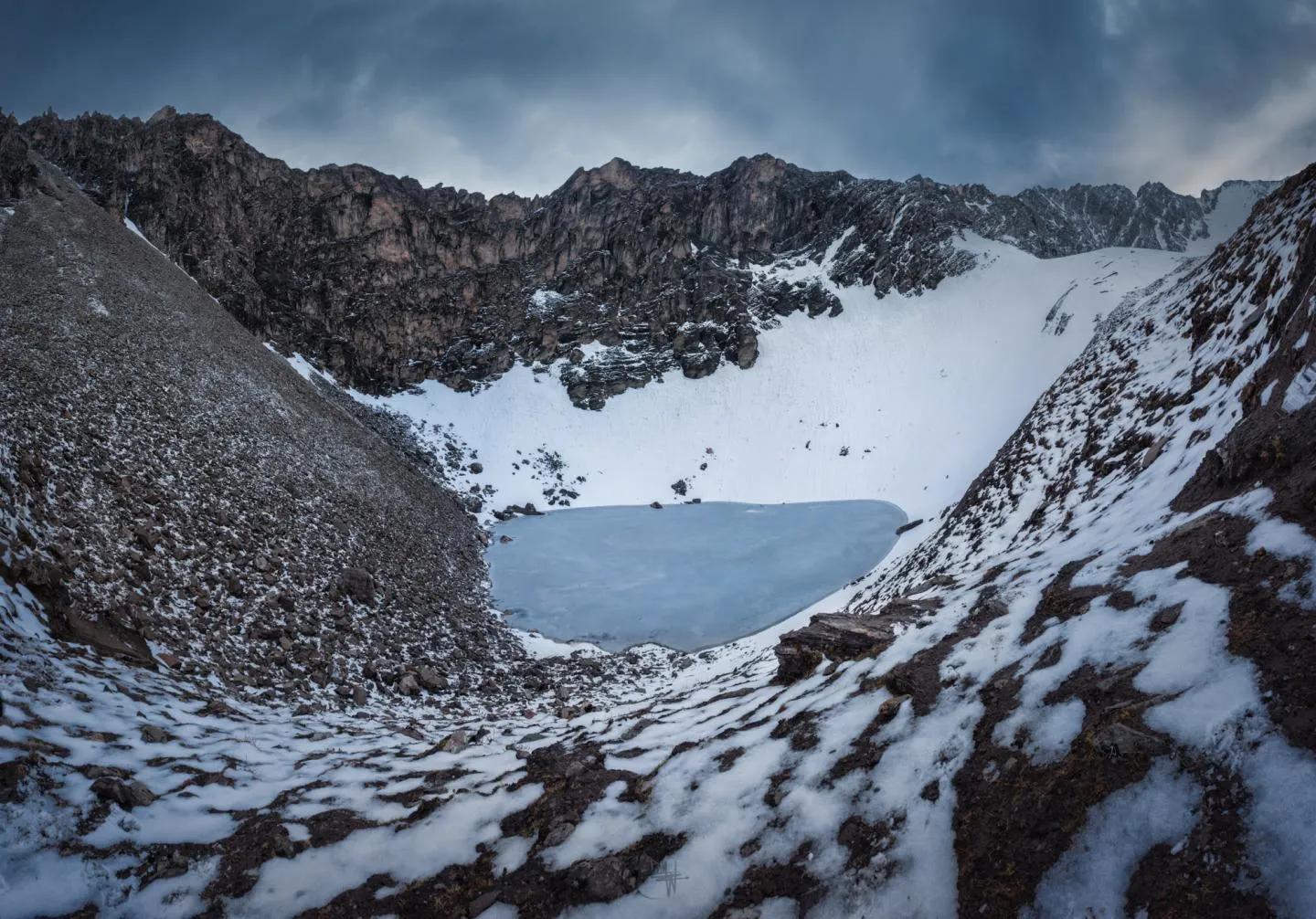
Roopkund: The Himalayan Lake Where Hundreds of Skeletons Still Tell a Story
Hidden at an altitude of over 16,000 feet in Uttarakhand, this small glacial lake is surrounded by snow, towering mountains—and hundreds of human skeletons.
For years, people have asked the same question:
Who were they, and how did they die here?

A Mystery Frozen in Time
The world discovered Roopkund in 1942 when a forest ranger found human bones scattered around the lake.
As the ice melted every summer, more skeletons appeared.
Some still had hair, leather shoes, and wooden artifacts beside them.
At first, people believed they were soldiers.
They were wrong.

The Legend
Local people have their own explanation.
According to folklore, King Jasdhaval and his procession were travelling to the sacred Nanda Devi shrine. Along the way, they celebrated loudly in a place considered sacred.
The goddess became angry and sent a deadly hailstorm.
Everyone died.
It sounds like a myth—but scientists later found many skulls with injuries that matched the impact of massive hailstones.
Science Changed the Story
Just when the mystery seemed solved, DNA studies revealed something unexpected.
The skeletons were not from one group.
Some were from South Asia.
Others had ancestry linked to the Mediterranean region.
Even stranger, they died centuries apart.
No one knows why people from different places ended up at the same remote lake.
Roopkund still keeps its biggest secret.

More Than Just a Trek
The journey to Roopkund passes through the stunning meadows of Ali Bugyal and Bedni Bugyal before climbing into the high Himalayas.
Although access to the lake is now restricted to protect the fragile environment, the story of Roopkund continues to attract trekkers, historians, and explorers from around the world.
Because sometimes, it's not the destination that stays with you.
It's the unanswered questions.